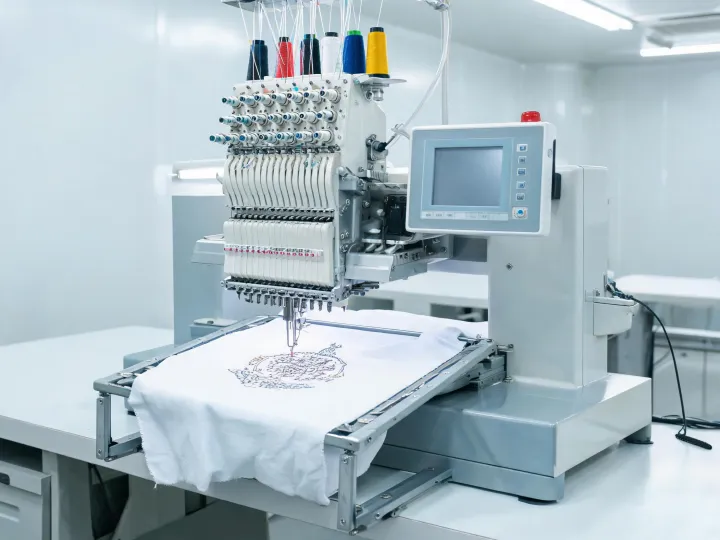
Flexible cell
Single-Head Embroidery
Use when artwork changes are frequent, sampling is continuous, or finished-garment handling matters more than parallel output.
Review category →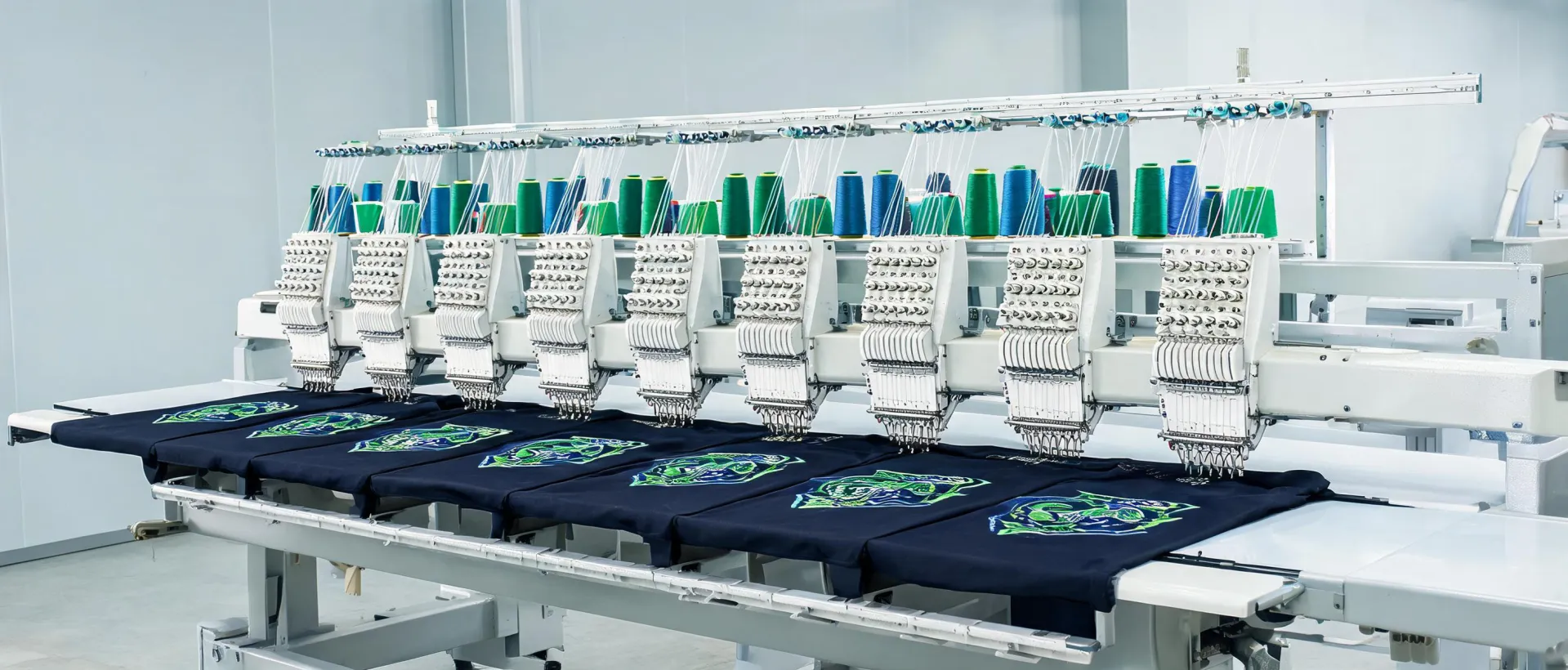
Match head count, garment handling, digitizing practice, and operator training before a purchase decision. Barudan helps production teams move from sample sew-out to a documented daily workflow.
Flexible sampling and short runs.
Parallel output for scheduled production.
Fixtures selected around finished goods.
A machine shortlist is useful only when it reflects artwork scale, fabric behavior, fixture clearance, operator coverage, and the planned shift schedule.
Use when artwork changes are frequent, sampling is continuous, or finished-garment handling matters more than parallel output.
Review category →
Evaluate batch size, color-change pattern, loading time, thread-break recovery, and aisle access before settling on head count.
Compare workflow →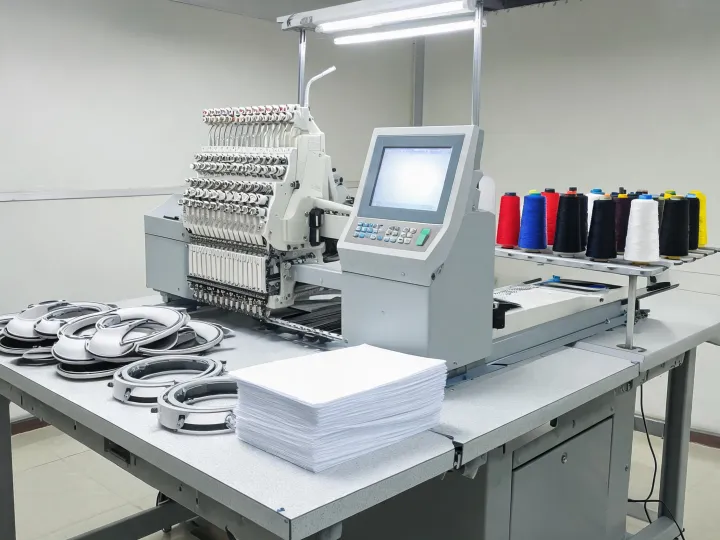
Confirm hoop geometry, sewing field, seam clearance, backing method, and repeatable loading before approving the application.
Explore applications →Good output depends on more than the machine. Stitch density, underlay, pull compensation, thread path, backing, hoop tension, and color sequence have to be checked together. Document the approved recipe so the next operator can reproduce the same sew-out.
See the application workflowSet stitch type, density, underlay, sequence, and trims around the substrate.
Run the actual file with intended thread, backing, hoop, and production speed.
Capture runtime, thread breaks, needle changes, defects, and operator notes.
A reliable embroidery decision is not the fastest catalog comparison. It is the configuration that reproduces an approved sample under the staffing, fabric, fixture, and maintenance conditions of the real production floor.
Barudan application planning principle · verify with a distributor-led sew-out
Share the artwork dimensions, garment construction, expected batch, thread specification, shift pattern, and installation constraints. A distributor can then plan a meaningful sample instead of a generic demonstration.