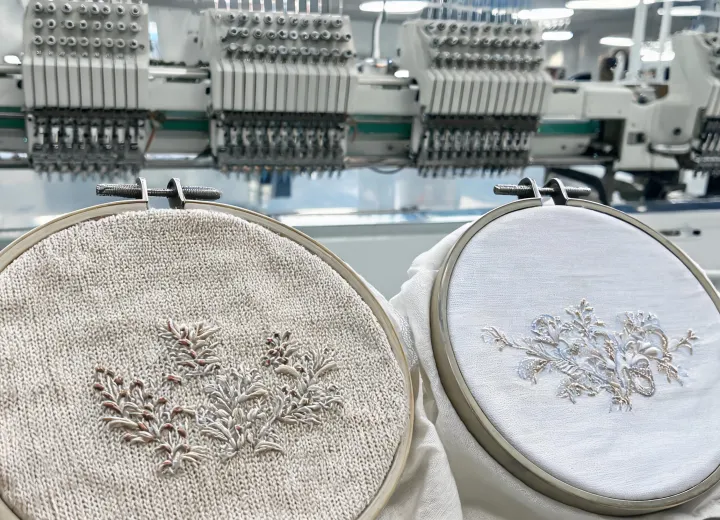
Apparel & Garment
Test stretch control, backing removal, skin-contact finish, placement tolerance, and distortion after handling. Lightweight knit and dense woven twill should not be treated as the same recipe.
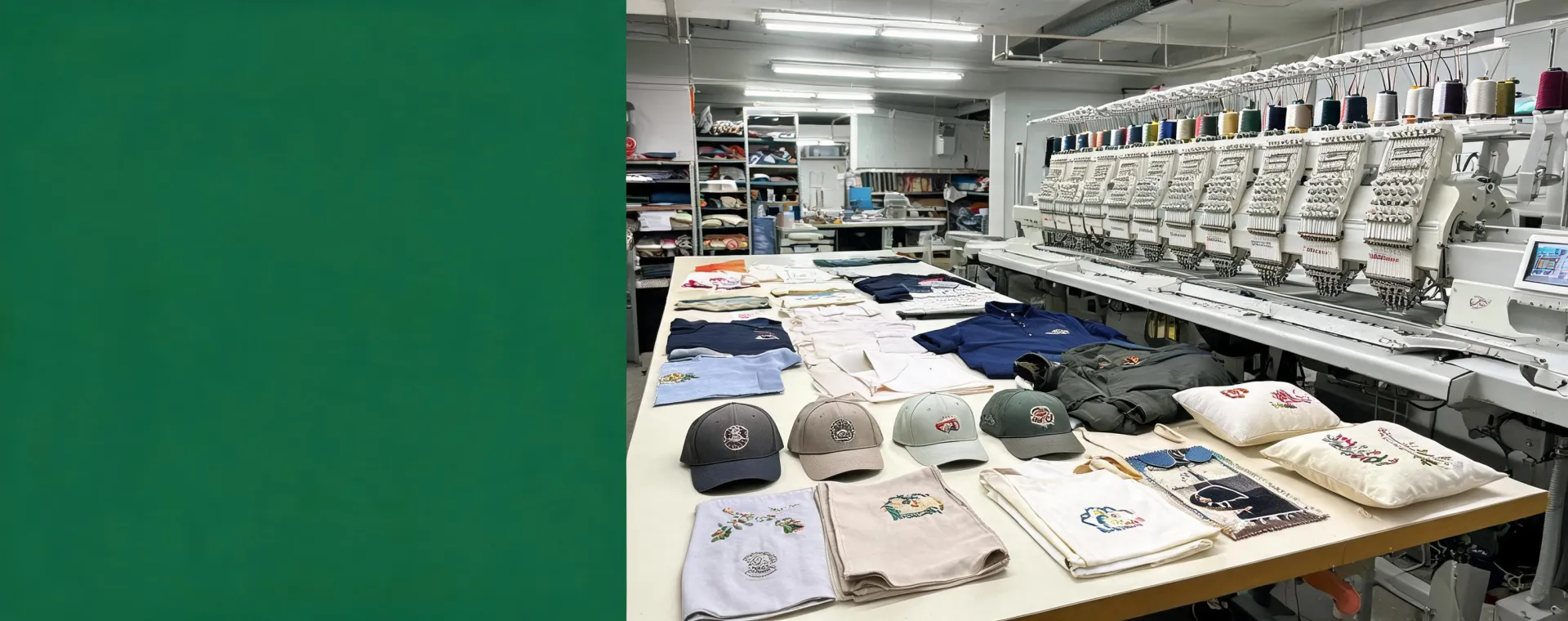
Different products impose different limits on hooping, clearance, distortion, placement, backing, and finishing. Select the application first, then prove the machine and fixture combination with the intended article.
The cards below describe test conditions rather than unsupported performance promises. Results depend on the design, substrate, consumables, preparation method, operator, and machine configuration.
Test stretch control, backing removal, skin-contact finish, placement tolerance, and distortion after handling. Lightweight knit and dense woven twill should not be treated as the same recipe.
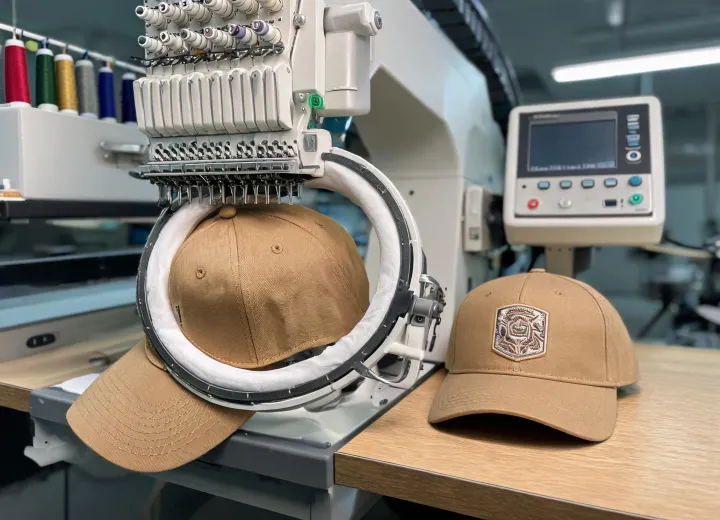
Verify crown construction, seam crossing, cap-frame registration, usable sewing field, design sequencing, and loading repeatability. A flat-panel approval does not validate a structured cap.
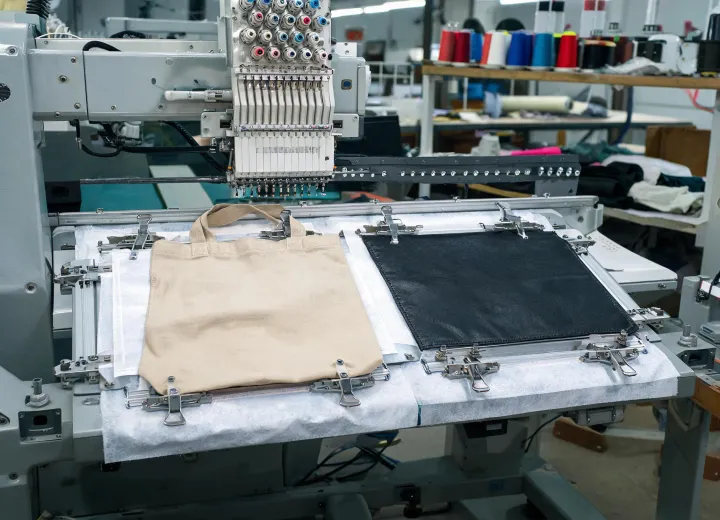
Check fixture access, thickness change, needle choice, surface marking, pocket interference, and safe loading. Finished assemblies may need a different handling plan than unsewn panels.
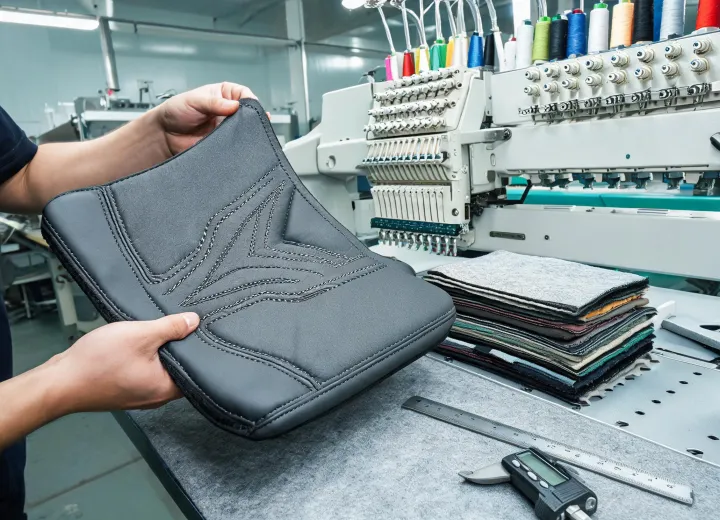
Evaluate layered material, visible-surface consistency, placement reference, thread specification, seam allowance, and downstream assembly. Acceptance criteria should be agreed before output is scaled.
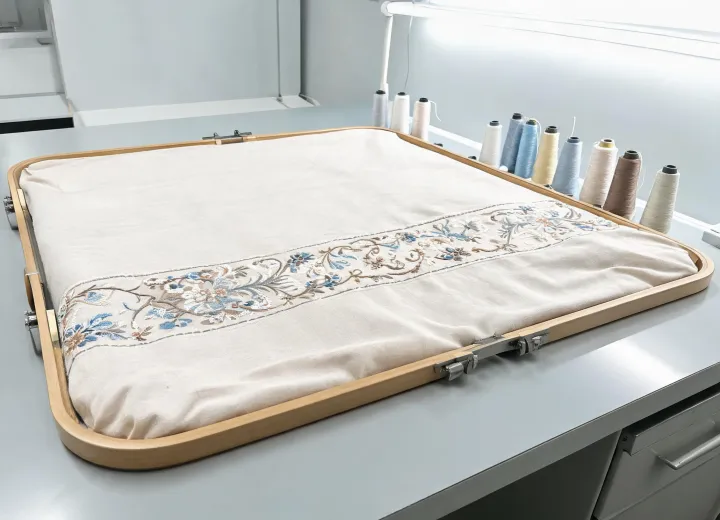
Plan for large panels, repeat placement, fabric drape, hoop marks, backing visibility, and handling space. Loading and unloading time can be as important as the needle cycle.
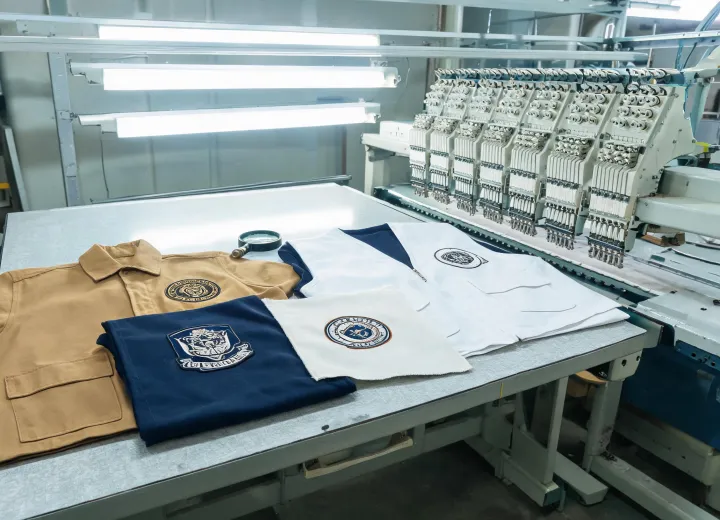
Use the intended fabric stack and wash requirement when defining thread, density, backing, and placement. Thick seams and pockets should be included in the sample if they occur in production.
For a useful application test, supply the construction that creates the greatest risk: stretch knit, thick seam, structured cap, restricted pocket, layered upholstery, or a large textile panel. Record the exact conditions and compare the finished result against agreed placement, registration, appearance, and handling criteria.