-
What actually makes Barudan a different embroidery machine manufacturer?
-
How do I know if a Barudan embroidery machine is the right investment?
-
How do I evaluate embroidery machine manufacturers for a bulk embroidery machine?
-
Can I use a Barudan machine for OEM or private-label programs?
-
How much does a bulk embroidery machine cost?
-
What about used or refurbished Barudan machines?
-
What's the most overlooked factor when comparing embroidery machine manufacturers?
-
How do I gauge after-sales support before buying?
Take it from someone who manages purchasing for a 40-person embroidery company. I handle about $200K in equipment and supply orders a year across six vendors, and I report to both operations and finance, so I can't afford to get this wrong. If you're searching for a barudan embroidery machine for sale, or trying to figure out how to evaluate embroidery machine manufacturers, this FAQ is built from the questions I actually had to answer.
What actually makes Barudan a different embroidery machine manufacturer?
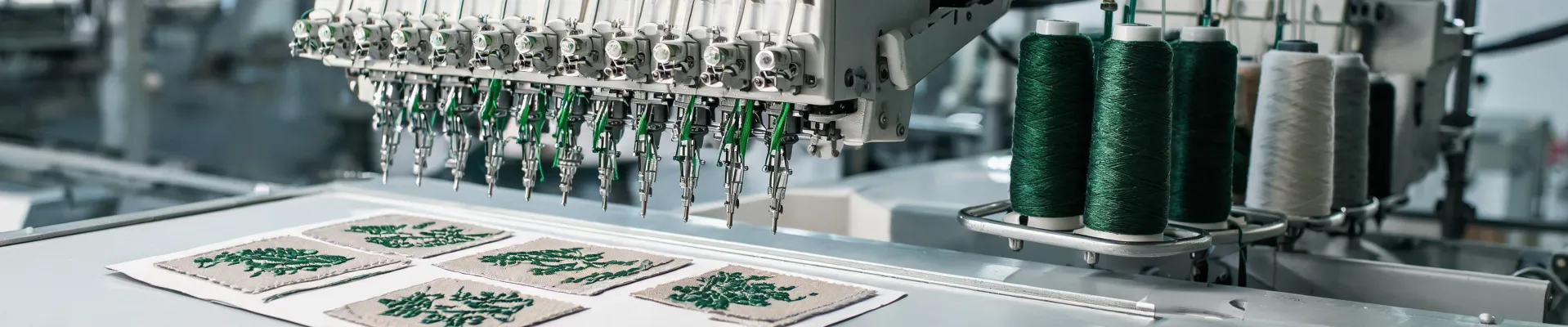
For us, it came down to configuration options. Barudan's lineup includes single-head and multi-head units with 4, 6, 8, or 12 heads, and most production models come with 15 needles per head. That isn't just spec-sheet flexibility. It changes what we can bid on. I can run a quick sample on the single-head and move to the 12-head for bulk work without rewriting the whole workflow.
According to Barudan's published specs (barudan.com, accessed April 2026), this range is consistent across their wholesale lineup. I'm not going to claim Barudan is perfect for every shop, or that it beats every other brand. But if you need volume plus variety, it's a serious name to evaluate.
How do I know if a Barudan embroidery machine is the right investment?
This is the question I get most often, and the honest answer isn't one that fits in a single line: it depends on your order mix. If you're running high-volume orders of the same design, a multi-head machine pays for itself fast. If your work is mostly single-piece samples and short runs, a 12-head machine will sit idle half the week.
We bought our first multi-head because we had a steady stream of 200-piece orders. If you don't have that volume yet, a single-head Barudan can get you started without wasted capacity. There's no 'best' machine, only the one that fits your workflow and budget. I'd recommend Barudan for repeatability across large runs, but I'd also tell a low-volume shop to hold off until the demand is real.
How do I evaluate embroidery machine manufacturers for a bulk embroidery machine?
Don't just compare head counts. I learned that the hard way. We didn't have a formal evaluation matrix for our first bulk embroidery machine order, and it cost us $2,400 in unexpected add-ons when a manufacturer's 'standard' configuration turned out to be an add-on. The third time that happened, I finally built a checklist. Now it includes:
- Needle configurations and head options
- Warranty terms and service response times
- Parts availability for the next 7-10 years
- Training included with installation
- Lead times and startup support
One line in a quote can completely change the price. Make every manufacturer confirm each spec in writing before you sign. That's the core of how to evaluate embroidery machine manufacturers without getting burned.
Can I use a Barudan machine for OEM or private-label programs?
Yes, and that's one reason wholesalers and distributors like them. Barudan offers OEM and private-label support, which means you can sell machines under your own brand if the volume makes sense. But the 'if' matters. We looked into a private-label arrangement and assumed it would be easy, until we saw the minimum order size. For our shop, the MOQ was higher than our annual inventory turn, so we passed.
Don't sign up for private labeling just for the branding. Work out whether the minimums fit your sales forecast. If they do, it's a solid way to build a recurring revenue line. If not, you're better off buying standard units and focusing on the service you can offer around them.
How much does a bulk embroidery machine cost?
I won't give you one number, because there isn't one. A 6-head Barudan with 15 needles is in a different price bracket than a single-head unit, and frame sizes and options push it further. Based on quotes I received in early 2026, multi-head production machines are a serious five-figure investment; fully loaded 12-head systems can go well into six figures. Verify current pricing with authorized dealers.
What matters more than the sticker price is total cost of ownership. Shipping, rigging, installation, training, spare parts, and downtime all count. The lowest quoted price often isn't the lowest total cost. Ask for a line-item quote so you can compare apples to apples.
What about used or refurbished Barudan machines?
I won't dismiss used equipment, because a well-maintained refurbished machine can be a smart entry point. But don't treat it as a no-risk shortcut. Ask for complete service history, current head count, and a load test before committing. If possible, have an independent technician inspect it.
I'll be honest: we chose a new machine over a refurbished one, and I kept second-guessing that decision for weeks. What if we'd saved the money? What if the used one was just as good? The wait until delivery was stressful. What settled it was the first production run coming out clean with zero tension issues. My point isn't that new is always right. It's that you need a clear reason for whichever you choose, and a backup plan for downtime.
What's the most overlooked factor when comparing embroidery machine manufacturers?
The machine itself isn't the whole project. I almost focused only on stitch speed and head count, but the part that never makes it into the brochure is the physical installation. We nearly forgot facility requirements. A 12-head industrial machine often needs three-phase power and a dedicated air compressor. Our first building didn't have either. If we'd signed the order without checking, installation would've added thousands to the project.
Put facility readiness at the top of your vendor evaluation checklist. Ask for electrical specs, air consumption, and floor plan dimensions before you get deep into quotes. It saves everyone time and gives you a negotiating lever on installation services.
How do I gauge after-sales support before buying?
Ask the manufacturer which technicians cover your region and what the response-time commitment is. Then test it by calling their support line with a technical question before you buy. I did this while evaluating Barudan, and the fact that I reached a person who knew the product made a difference.
Another thing: talk to other buyers, not just the sales rep. I also ask for the name of a current customer in a similar industry. Not because I'll necessarily call them, but because if the manufacturer hesitates to provide one, that's a red flag. When we had a presser foot issue in 2024, the service team's response time was more valuable than the warranty itself. That's why I put support ahead of price in the final decision. If support is slow, every hour of downtime becomes a direct cost.

Jane Smith
I’m Jane Smith, a senior content writer with over 15 years of experience in the packaging and printing industry. I specialize in writing about the latest trends, technologies, and best practices in packaging design, sustainability, and printing techniques. My goal is to help businesses understand complex printing processes and design solutions that enhance both product packaging and brand visibility.
Leave a Reply