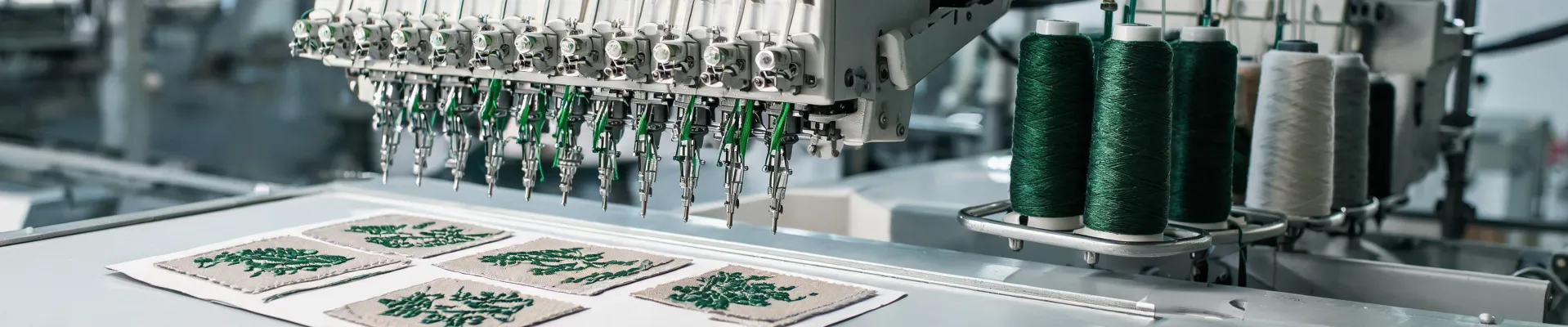
It started with a spreadsheet. In early 2024, our operations manager pulled the numbers for the previous year and found something we couldn't ignore: our company had spent close to $80,000 on outsourced embroidery. Patches, logo stitching, small production runs for corporate clients—it all added up.
"We need to talk about this."
That conversation started a six-month process that ended with a Barudan embroidery machine sitting on our production floor. Along the way, I learned more about machine certification, distributor agreements, and private-label sourcing than I ever expected to know. I'm sharing this because most of what I found wasn't in the sales brochures.
Why We Decided to Bring Embroidery In-House
I'm the purchasing manager at a 60-person custom apparel company. We produce uniforms, promotional gear, and branded sportswear for regional clients. For years, embroidery was simply something we outsourced. It made sense when volumes were small and designs were simple.
But by 2024, our client base had changed. Rush orders were becoming the norm. Minimum order quantities from our embroidery vendor forced us to tell clients "no" on smaller requests. And our CFO kept asking why we were paying a 40% markup on something a machine could do in-house.
So I got the assignment: research embroidery machines, recommend one, and put together a budget with a defensible payback period.
The Research Phase: More Options Than I Expected
I started with the obvious search—"barudan embroidery machine for sale." Then I broadened out. Then I fell into a rabbit hole covering three types of machines:
- New embroidery machines from established brands like Barudan, purchased through authorized embroidery machine distributors
- Private-label embroidery machines, often from overseas manufacturers, that can carry your company's branding
- Used or refurbished equipment from resellers
Most buyers focus on the purchase price and completely miss the costs that follow: certification gaps, customs fees, training time, and parts lead times. I was no different at the start.
The question everyone asks is, "How much is the machine?" The question they should ask is, "What has to happen before that machine can legally run in my facility?"
The Private Label Detour
The private-label embroidery machine route sounded genuinely appealing. I talked to three overseas manufacturers at a trade show in early 2024. The unit price was roughly 35–40% lower than Barudan's list price for a comparable multi-head machine. My spreadsheet loved it.
Then I started asking harder questions.
Certification: the manufacturers were vague about electrical safety standards. One said they'd "help with paperwork" for import. That turned out to mean a certificate of origin—not the certification you need for commercial equipment in North America. Look, I'm not saying all private-label machines are unregulated. I'm saying the burden of sourcing acceptable documentation falls entirely on you.
Parts and support: I asked one representative about replacement needle bars and rotary hooks. The answer: "Usually two to four weeks for spares." For a commercial operation, that's a deal-breaker. Machine downtime in our industry is not like office equipment downtime. A machine down for three weeks means client deadlines missed and revenue lost.
Training: the private-label options didn't include operator training. Our team would have been learning on a machine with no structured support. That felt risky.
Honestly, I was tempted. The price gap was real. But I kept coming back to the same concern: if something goes wrong, what's the cost?
Embroidery Machine Compliance Requirements: The Part Nobody Leads With
Here's the twist that changed my timeline.
Commercial embroidery machines are subject to compliance requirements that first-time buyers don't usually think about. I've since organized them into four buckets: electrical safety certification—UL or ETL listing in the U.S., CE in Europe, each with distinct requirements; workplace safety features like emergency stops, needle guards, and proper labeling; noise and environmental considerations if you're in a mixed-use facility; and import documentation proving the equipment meets those standards.
A machine with CE certification for the European market doesn't automatically meet U.S. standards. And some importers genuinely don't have the right paperwork. We probably would have cleared customs anyway, but the first time an insurance auditor or OSHA inspector asks for documentation, you'd better have it.
Looking back, I should have asked about compliance in the first conversation with every supplier. At the time, I assumed machines sold in the U.S. met the same standards by default. That was naive. It's also how I learned to verify, not assume.
The Decision: Why We Chose Barudan
After three months of research, I requested quotes from two authorized Barudan embroidery machine distributors. I also got a quote from a reseller for a competing brand, but I'm not going to name-drop the competition. Those machines have strengths too.
For us, Barudan made sense for three reasons.
First, the brand has the history. Barudan has been in the textile machinery business for over a century, and their name has been on commercial embroidery machines since the 1960s. Their equipment is a standard in production shops worldwide. That track record matters when you're investing six figures in hardware.
Second, the distributor network. Our local distributor stocks common spare parts and offers service contracts. That response time is something a private-label supplier simply can't match.
Third, training and onboarding were included in the purchase agreement. Our lead operator got two days of hands-on training. That alone saved us weeks of trial and error.
We went with a 6-head, 15-needle model. It wasn't the cheapest quote I received, and I'm not going to pretend it was. But the total package—certification paperwork, delivery, installation, training, and first-year parts buffer—came to roughly $85,000. In my opinion, the certainty was worth the premium.
"The cheapest machine isn't cheap if it can't run when you need it."
Our CFO said that during the budget review, and she was right.
If your situation is different, Barudan genuinely might not be the right fit. I'll come back to that.
Installation and the First Production Run
Delivery took about six weeks from order. The distributor handled logistics, placement, and calibration. The machine arrived with all the compliance documentation we needed, which made customs processing frictionless.
There's something satisfying about hearing six heads running in sync for the first time. After the spreadsheets, the compliance checks, and the budget negotiations, seeing actual production was the payoff.
Our first real run was 200 embroidered polos for a regional construction company with a two-week deadline. We finished in two days. That was the moment I knew we'd made the right call—the machine earned its keep in operational flexibility before it even paid for itself.
What I'd Do Differently, and Who Shouldn't Buy a Barudan
The honest limitation: a commercial multi-head Barudan is overkill for some businesses. If you're a hobbyist or a small shop doing occasional single-item orders, buy a single-head consumer machine and skip the commercial route. If you're primarily buying pre-stitched patches and just need simple lettering occasionally, outsourcing is still a valid option.
But if you're a growing apparel company and you've confirmed the math makes sense, here's the advice I'd give:
- Ask for compliance documentation before you ask for a price quote
- Ask the distributor how long common replacement parts take—if they don't stock critical spares, reconsider
- Verify that training is included; it's worth more than the discount you'd get by skipping it
- If you're evaluating private-label machines, insist on third-party certification evidence, not promises
- Budget for the full cost: machine, delivery, installation, customs, training, first-year maintenance
In the end, our Barudan embroidery machine purchase wasn't just about hardware. It was about compliance, support, and the confidence that comes from knowing the equipment will keep running when deadlines depend on it.
That's the part nobody puts in the brochure. Simple as that.

Jane Smith
I’m Jane Smith, a senior content writer with over 15 years of experience in the packaging and printing industry. I specialize in writing about the latest trends, technologies, and best practices in packaging design, sustainability, and printing techniques. My goal is to help businesses understand complex printing processes and design solutions that enhance both product packaging and brand visibility.
Leave a Reply